Operations
10 questions: California Pizza Kitchen co-founder Rick Rosenfield
In this 10 Questions, CPK co-founder reflects on the challenges of rapid expansion and outside investment, the operational complexity of running a pizza business and the need to balance technology with genuine hospitality.
November 18, 2026
 ChatGPT
 Grok
 Perplexity
 Claude
At Pizza Marketplace, we spend a lot of time covering what restaurant brands are doing. But sometimes the more interesting story is why their leaders are doing it and what they've learned along the way. That's the idea behind 10 Questions, a series that goes beyond the headlines to get inside the minds of the people shaping the pizza industry. In this series, each leader answers the same set of questions, giving readers a chance to see how different leaders approach the challenges, opportunities and decisions shaping their brands — and the pizza industry as a whole.
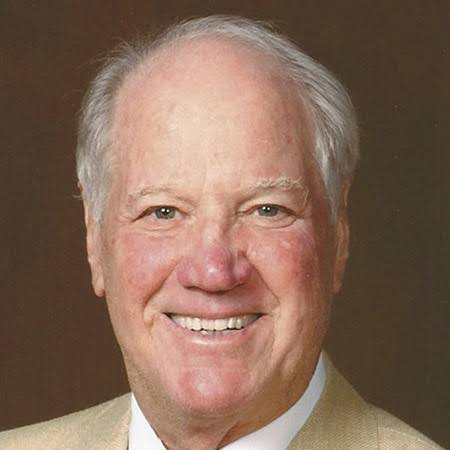 From reimagining what a pizza restaurant could be to building one of the industry's most recognizable brands, California Pizza Kitchen co-founder Rick Rosenfield has spent decades challenging convention. A former federal prosecutor, Rosenfield and partner Larry Flax set out to create more than a restaurant: They envisioned a brand built on culinary creativity, hospitality and a distinctive culture.
In this 10 Questions feature, Rosenfield reflects on the decisions that shaped CPK, why people and culture remain the foundation of a successful restaurant business, the lessons of outside investment and the importance of sustainable growth.
Q:What first drew you to the pizza business?
Rosenfield: It wasn't pizza alone that drew Larry Flax and me. We were successful federal prosecutors and defense attorneys, but we wanted to build something of our own. We loved restaurants, and pizza offered an extraordinary blank canvas. We believed it could be more creative, served in a more inviting environment and enjoyed by a much broader audience. We didn't simply want to open a restaurant. From the beginning, we wanted to create a brand.
Q:What inspires you on a daily basis?
Rosenfield: People inspire me—particularly those who take a risk, reinvent themselves or help someone else succeed. I'm now 80, and I remain energized by new ideas, speaking with entrepreneurs and hearing from longtime CPK employees whose lives and careers were shaped by the culture we created. I don't intend to waste my 80s. I've really enjoyed doing interviews, and podcasts and now am enthusiastic about upcoming keynotes including the Franchise and Innovation Summit in New Orleans in March and then speaking at the National Restaurant Show in Chicago in May. Most recently I've started doing zoom appearances in college classes. My partner, CPK co-founder, Larry Flax and I spoke to a class last week at the USC Marshall School of Business in LA and I have some upcoming classes being planned.
Q.What has been the biggest lesson you've learned throughout your career in the pizza industry?
Rosenfield: Culture drives performance. You can have excellent food, a strong location and a clever marketing campaign, but people ultimately deliver the experience. If employees feel respected, see opportunity, understand what is expected and are treated with kindness, they will take better care of the guests. That belief became our ROCK values: Respect, Opportunity, Communication and Kindness.
Q:What's one decision you made that didn't go as planned but ultimately taught you something valuable?
Rosenfield: Bringing in PepsiCo gave us resources and opportunities we never could have created on our own, but it also taught us what can happen when founders succumb to the pressure to grow faster which ultimately threatened the qualities that made CPK special. I learned that capital can accelerate growth, but it can also change priorities. Founders must understand that the moment they accept outside money, their objectives and those of their new partners may not remain aligned.
Q: What makes a great pizza brand? Is it the food, the people, the culture, the customer experience—or something else?
Rosenfield: It takes all of those things, but people and culture connect them. Great food may persuade someone to visit once. A consistently warm experience gives that person a reason to return. A great brand also has a clear identity. Customers and employees should understand what it stands for and what makes it different.
Q: What's one thing about the pizza industry that people outside it don't understand?
Rosenfield:They often underestimate its operational complexity. A restaurant must manufacture and deliver hundreds of individual products every day, in real time, through human interaction—and every guest expects the experience to be right. At the same time, margins are narrow and costs are constantly changing. When everything works, it can look effortless. It certainly isn't.
Q: When you look five years ahead, what excites you most about the future of pizza?
Rosenfield:Pizza has always been adaptable. It crosses generations, cultures and economic boundaries, and it continues to invite creativity. Technology can make restaurants more efficient and help them understand their customers, but the greatest opportunities will still come from imaginative food and genuine hospitality. The challenge will be using technology to strengthen the human experience rather than replace it.
Q: What's something you still want to accomplish that you haven't done yet?
Rosenfield: I want the lessons behind ROCK to reach well beyond CPK. Through speaking, writing and advising entrepreneurs, I hope to demonstrate that a people-first culture and strong financial performance are mutually reinforcing. I'm also intrigued by the possibility of writing a new, culture-focused book built around those principles.
Q:What's the one thing you would never compromise on in business?
Rosenfield:Integrity. Larry and I regularly returned to a simple principle: "Do the right thing." That includes keeping your word, treating people fairly and having the courage to make difficult decisions. Kindness should never be mistaken for weakness. It can coexist with accountability and high standards.
Q:What's next for you and California Pizza Kitchen now that it's under new ownership—and what should pizza operators be watching?
Rosenfield: CPK and I are now on separate paths. I no longer have any role in its management, but I will always love the company and the people who helped build it. I'm hopeful that the new owners will reconnect with the creativity, hospitality and culture that made CPK distinctive.
For me, the next chapter includes writing, speaking and advising a limited number of entrepreneurs and business leaders. Operators should watch whether established brands can modernize while preserving their identity. A turnaround requires discipline, but lasting performance also requires giving employees and customers a reason to believe in the brand again.
Bonus Question:If you could change one thing about the way the pizza industry operates, what would it be?
Rosenfield: I would change the assumption that growth is measured primarily by the number of locations. Opening restaurants is relatively easy compared with building an organization capable of supporting them. Sustainable growth requires strong unit economics, trained leaders and a culture that travels. More restaurants do not necessarily create a better company.
Related Media
Subscribe
Get the latest news and resources from Pizza Marketplace.
Recent Posts

Recent Podcasts