National Restaurant Association
Innovation in every sip: How Tractor Beverage Co. is changing the beverage landscape
John Murphy, chief revenue officer of Tractor Beverage Co., discusses the company's award-winning revival of the 17th-century "switchel" and how its organic, flexible beverage formats are meeting the 2026 demand for transparency and functional variety in the restaurant industry.

May 13, 2026 by Mandy Wolf Detwiler — Editor, Connect Media
 ChatGPT
 Grok
Grok Perplexity
 Claude
As the 2026 National Restaurant Association Show kicks off, the beverage landscape is undergoing a radical shift toward "clean label" transparency and functional refreshment.
Leading the charge is Tractor Beverage Co., a brand that has built its reputation on the intersection of organic integrity and culinary innovation.
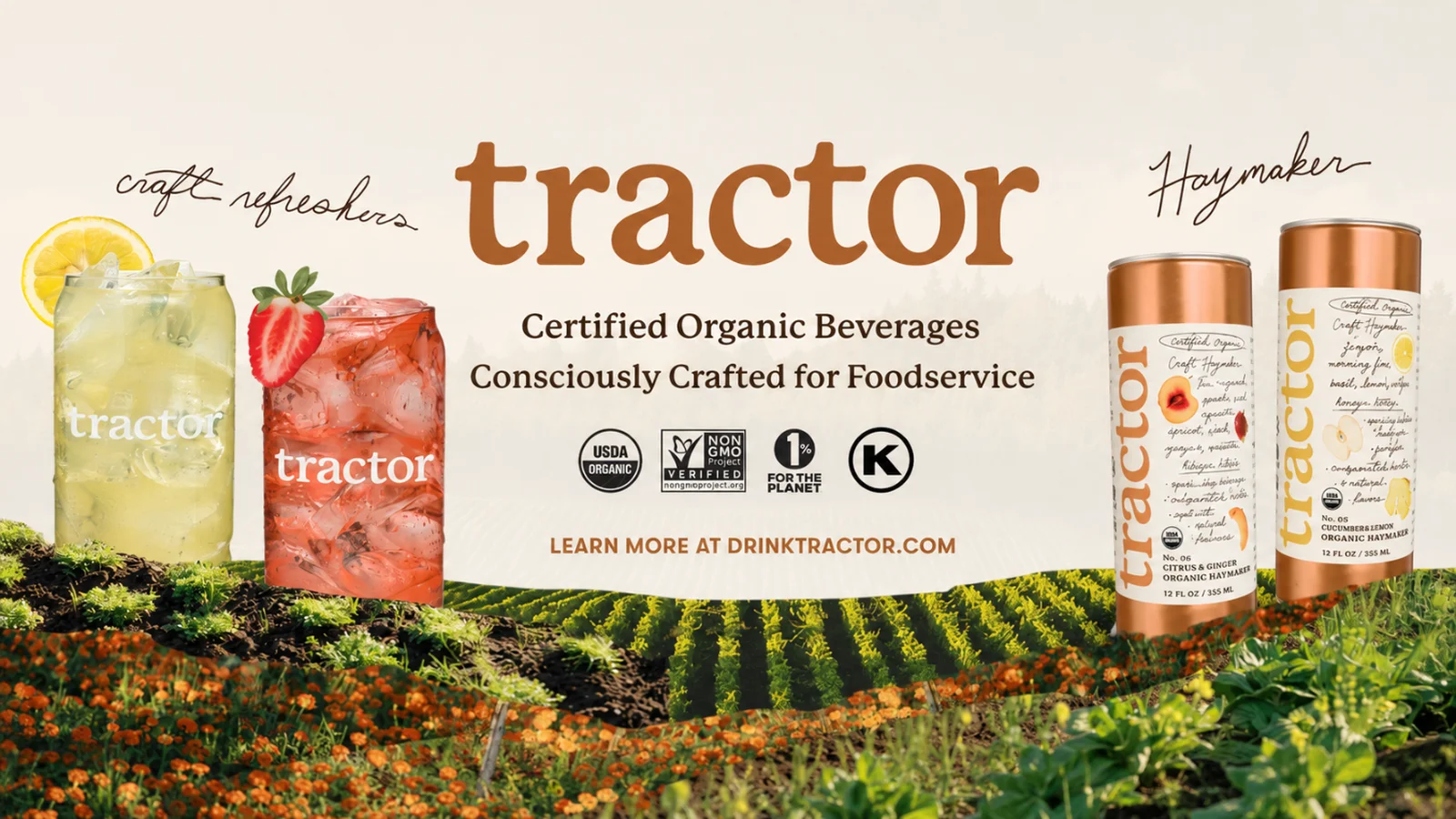
This year, the spotlight shines brightly on their Organic Craft Haymaker. A modern reimagining of the 17th-century "switchel," the Haymaker's citrus ginger flavor has already secured the prestigious 2026 FABI Favorite award — an honor reserved for only 10 of the most influential products in the industry.
But Tractor's impact extends beyond a single trophy. From RTD cans designed for the delivery era to versatile concentrates that power premium catering, the company is redefining how operators balance operational efficiency with the "Soil & Soul" philosophy. We reached out to John Murphy, chief revenue officer, via an email interview to discuss the revival of historic tonics, the strategic power of format flexibility and why organic certification is becoming the new baseline for the modern diner.
Q: For the 2026 National Restaurant Association Show, Tractor Beverage Co. is positioned perfectly at the intersection of "clean label" transparency and the booming demand for functional beverages. Your new Organic Craft Haymaker is a standout this year, particularly because the citrus ginger flavor just won the 2026 FABI Favorite award (one of only 10 products to get that top honor). The Haymaker is inspired by a traditional farmer's "switchel." What is that and why did Tractor choose to revive this specific 17th-century recipe for the modern 2026 restaurant guest?
Murphy:Haymaker is our modern take on switchel — a centuries-old farmer's tonic traditionally made with apple cider vinegar, ginger, and natural sweeteners used to help refresh and replenish during long days in the field.
We were drawn to switchel because it's one of those rare beverages that actually has a real story and real purpose behind it — not something manufactured for trend. It was originally used by farmers for hydration and refreshment during physically demanding work, which made it feel surprisingly relevant even today.
What makes Haymaker especially meaningful for us is that this wasn't an overnight idea. Our founders had been sitting on the concept for years because they believed there was an opportunity to bring this style of beverage back in a way that felt modern, approachable and restaurant-ready.
Bringing it to life allowed us to take something simple and historic and translate it into a bright, organic beverage with bold flavor and real character. It's familiar in ingredients, elevated in execution, and that balance is what made it worth reviving for today's guests.
Q: You offer everything from RTD cans to bubbler concentrates and frozen formats. For a restaurant operator, what is the strategic advantage of carrying the Haymaker in a can versus serving your Refreshers through a traditional bubbler?
Murphy:The advantage is giving operators format flexibility without sacrificing consistency or brand experience.
Cans are ideal for speed, portability, and operational simplicity — they perform especially well in grab-and-go, delivery, and high-volume environments where consistency and efficiency matter most. Bubblers, on the other hand, bring a completely different value — they create visibility, discovery and a sense of experience at the point of service.
So instead of forcing operators into one system, we allow them to build a beverage program that fits their operational reality while still delivering a consistent Tractor experience across formats.
Q: The Haymaker only has five grams of sugar. Are you seeing guest preferences shift when it comes to sugar content and beverage choices?
Murphy: We're seeing consumers become more intentional about the role beverages play across different occasions throughout the day. Rather than approaching beverages through a one-size-fits-all mindset, guests are looking for options that fit different moments — whether that's something more indulgent, something more refreshing, or something with a lighter overall profile. Haymaker was designed to offer another choice within that landscape: a bold, refreshing beverage with balanced flavor and a unique profile that stands apart from more traditional sparkling options."
Q: You mentioned that your concentrates can extend to pitchers and catering applications. In an era of rising delivery and off-premise dining, how is Tractor helping restaurants maintain a "premium" beverage experience for customers who aren't dining in the physical restaurant?
Murphy:Off-premise has become an extension of the dining experience, not a separate channel.
We help operators maintain a premium experience by designing formats that hold up outside the four walls — whether that's concentrates for consistent batching, RTDs for portability or systems built for catering and delivery scale.
The focus is on consistency and care at every touch point. Even when a guest isn't physically in the restaurant, the beverage should still feel intentional, high-quality, and aligned with what they would receive in-store.
Q: Why are beverage alternatives to traditional sodas so popular right now and how can restaurants easily jump on the trend without redoing their entire beverage menu?
Murphy:What's driving the shift is that guests want more variety and more intentional beverage choices.
Traditional soda still has a place, but people are increasingly exploring alternatives that feel more interesting — sparkling tonics, refreshers, craft-style beverages and functional options that offer more complexity and better ingredients.
For operators, the opportunity is simple: you don't need to overhaul your beverage program. Introducing one or two differentiated options can completely change how guests perceive the menu, drive trial and create a sense of innovation without operational disruption."
Q: Tractor has always leaned heavily into being non-GMO and organic. As we move through 2026, do you find that guests are now expecting these certifications as a standard, or is it still a primary reason why they choose one restaurant over a competitor?
Murphy: It's increasingly both — expectation and differentiation are happening at the same time.
For a growing number of consumers, organic and non-GMO are becoming baseline signals of transparency and trust. At the same time, they still matter as a competitive advantage in foodservice, where ingredient quality isn't always visible to the guest.
For Tractor,. these standards are foundational rather than additive. They're part of our broader Soil & Soul philosophy — the idea that better ingredients and better farming practices create better outcomes across the entire food system, from the soil where ingredients are grown all the way to the guest experience at the table. That philosophy guides how we think about sourcing, partnerships and product development. It's not just about what's left out of the beverage — it's about building something more thoughtful from the ground up
It's becoming both expectation and differentiation at the same time. Consumers increasingly view organic and non-GMO ingredients as signals of transparency, quality and trust — especially in foodservice where ingredient quality isn't always obvious.
For Tractor, those standards aren't marketing claims. They're foundational to our Soil & Soul philosophy — the belief that better ingredients and better farming practices create a better guest experience and a healthier food system overall. That's resonating with operators who want to serve products that align with where consumer expectations are heading.
About Mandy Wolf Detwiler

Mandy Wolf Detwiler is the Pizzamarketplace.com and QSRweb.com editor for Connect Media. An award-winning journalist, Mandy brings more than 20 years’ experience covering food, people and places. Mandy has been featured on the Food Network and has won numerous awards for her coverage of the restaurant industry. She has an insatiable appetite for learning, and, yes, she can tell you where to find the best pizza slices in the country.
Related Media
Featured Vendor

HungerRush brings every part of your restaurant together — orders, guests, data — in one platform built for fast casual and quick-serve multi-location brands ready to grow.
Subscribe
Get the latest news and resources from Pizza Marketplace.
Recent Posts





Recent Podcasts