Operations
Can a robot have soul? How Moto Pizza uses automation to keep 'mom-and-pop' feel
Moto Pizza uses robotics and automation to streamline repetitive kitchen tasks, allowing the business to rapidly scale its volume while maintaining the handcrafted quality, community-focused feel and artisan soul of its Filipino-inspired pies.
June 26, 2026 by Mandy Wolf Detwiler — Editor, Connect Media
 ChatGPT
 Grok
Grok Perplexity
 Claude
When the COVID-19 pandemic decimated the Seattle hostel business Lee Kindell and his wife, Nancy, had nurtured for over 15 years, they poured the last of their savings into a 500-square-foot house to chase a quiet retirement dream: a tiny, unassuming pizza shop. What began as a humble pivot — fueled by a massive sourdough starter named Betty and a love for the communal "family dinners" they once hosted for backpackers — unexpectedly exploded into a culinary phenomenon.
Today, Seattle-based Moto Pizza is no longer just a viral sensation famous for its staggering three-month waitlist; it is a rapidly scaling pizza empire that boldly marries handcrafted, Filipino-inspired flavor profiles with stadium-sized volume, robotic prep lines and autonomous drone deliveries.
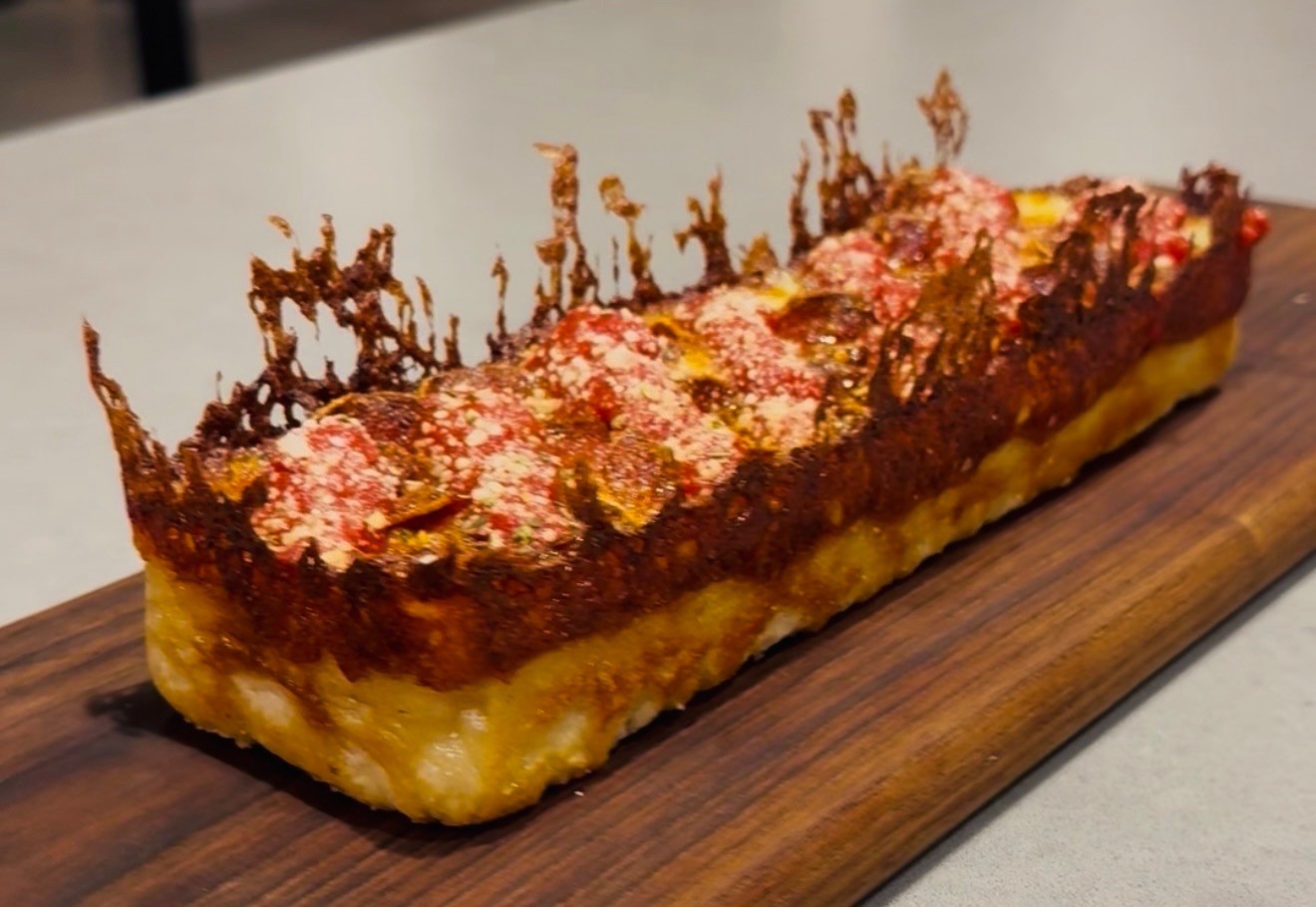 |
Photo: Moto |
The art of pizza
Kindell said he fell in love with the process of making pizza. He had made it for the scores of travelers who came through his hotels. Though he originally used store-bought dough, he started making it himself with a sourdough starter.
"I just fell in love with the whole artisan nature of what pizza is about," Kindell said in a phone interview with Pizza Marketplace. "It's like this beautiful canvas that you can really be creative with. I just kind of developed my own signature style out of it and was able to apply a lot of my Filipino heritage to it and bring something a little bit different to the table."
Kindell started collecting sourdough starters from chefs around the world and adding it to his own, affectionately named Betty and weighing in at 500 pounds, "so she's really this Frankenstein of all these different chefs, and it's not really like anything extraordinary, but the novelty of it to me is really special," he added.
Kindell has an acronym that he loves, taken from another chef, called F.A.T.T.T.: flavor, appearance, taste, texture and temperature. He uses those ideals to balance his pizzas.
"I think a really simple way of looking at it, and a lot of chefs would agree with this, if you have your salt, your sweet and your fat balanced, you can pretty much throw anything on top of a pizza and it will work well," Kindell explained. "But I do it with a certain bit of restraint, so it's not overdone. It sounds like my pizzas look like they're heavy, but a lot of people will tell you that it feels really light when you eat it."
Kindell's high-quality, niche ingredients like Dungeness crab or specific Filipino pork cuts cost a bit more than traditional ingredients, but he leans into contract pricing where he locks in a price for the year. He weighs his products and uses a scale and said he gets a bit of grief for that, but additional grams of product add up to pounds over the years and managing inventory is important.
Operations
By the end of the year, Moto will have 13 stores. Kindell owns them all. He's opening three in San Diego and there are also stadium locations.
He said he's gotten good at doing the big numbers in stadiums and creating pizzas fast to meet demand — sometimes upward of 3,500 pizzas in one day out of one spot. When Kindell started in his first stadium, he said he struggled with operations and labor was over 50%. But once Kindell dialed in his model and got his feet under him, the stadium operations fell into place.
He now makes dough in one spot and delivers it to his restaurants and stadiums. He doesn't par-bake his dough because he believes that the structure of the pizza changes, though he is now considering it due to the high volume of his restaurants.
Consistency across the brand is handled with solid systems, and Kindell calls himself a "systems guy and a data freak."
"I love data and I love systems," he said. "When you have systems, that creates consistency. And when you have consistency, that's where you get that product where it still tastes like a mom-and-pop pizza. I constantly hear from people in the stadium, it's like, 'I can't believe this is just as good as in the store.'"
For instance, seven stripes of tomato sauce on a pizza are almost two-and-a-half ounces.
And Moto has a low turnover rate, sitting at around 5%, because, he said, they take good care of their people and train them well.
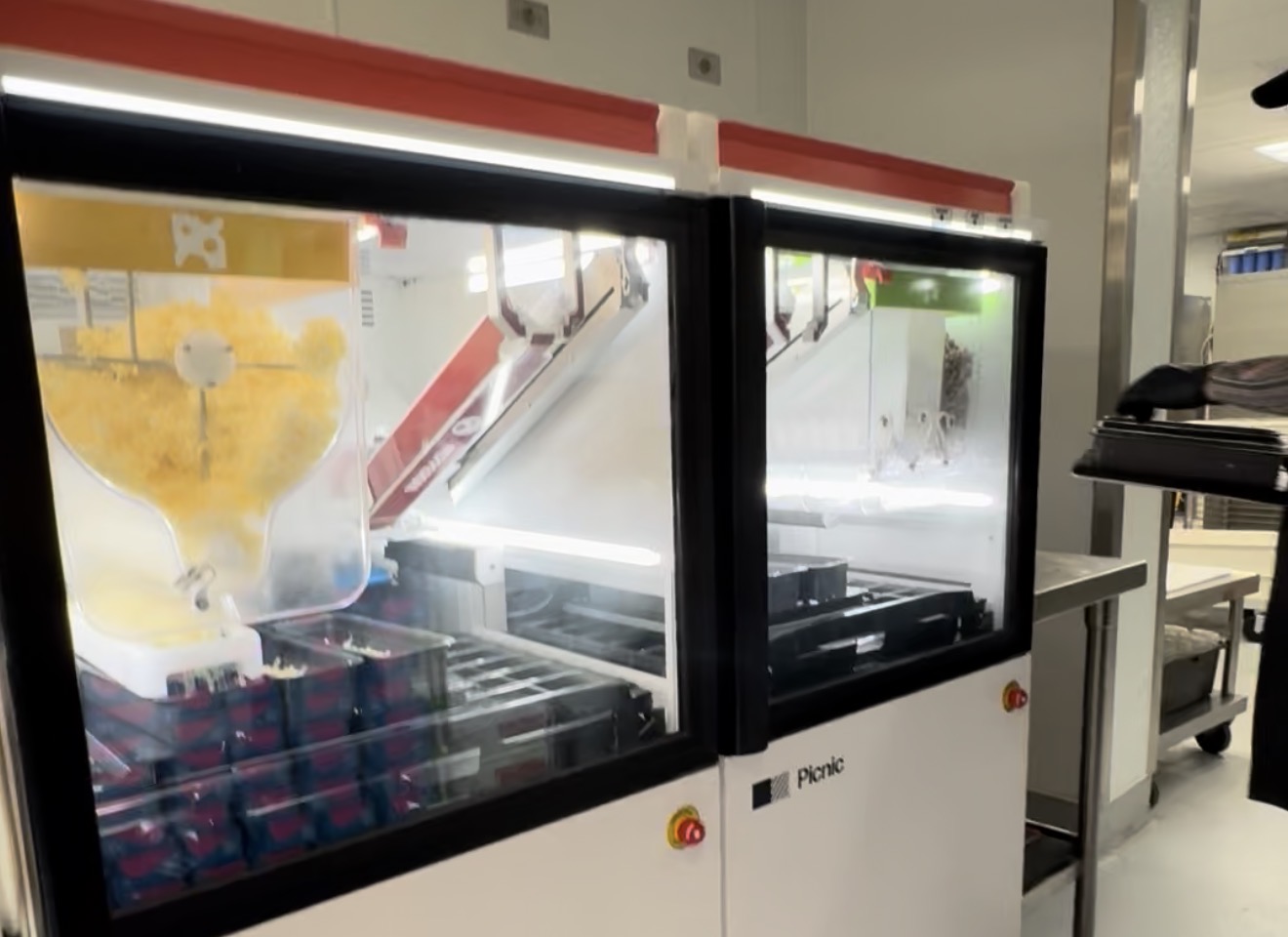 |
The Picnic pizza topping machine Moto uses. Photo: Moto |
On the cutting edge
Part of what sets Moto Pizza apart from its competition is the use of robotics, which he started in his Belltown, Washington, location.
How does he balance the precision of robotics with the soul of a handcrafted artisan pizza?
That's the biggest question Kindell gets from doubters. He uses this analogy: robotics is a tool much like a wooden spoon is for a chef. It's the intention of what he wants to create.
"It's that what gets you there, not the equipment," he explained. "And I think as we express that, people are understanding more and more that, 'Oh, a robot made this? Wow, it tastes like I got it from a shop made from hand.' That's the idea."
While there are those who fear robotics will replace jobs, Kindell disagrees. He uses robotics to top his pizza. When making a pizza by hand, Kindell said it takes 13 people. When using robotics, it takes just three people to prepare and fill the robot, freeing up those other 10 employees to do other tasks, like putting more people on the front side to handle the lines. He doesn't get rid of those 10 people — just utilizes them in better ways.
"What a lot of people don't see is robotics are going to take over the things that are constant and repetitive. For example, I think every restaurant's going to have a box folder, where you stick a stack of boxes in and it just folds the boxes for you, knocks it out. You can take that person who spends an hour, two hours folding boxes and a robot does that. How is that going to change your operation, right? And it's not like it's taking jobs away, it's just letting you refine what you do."
At the end of the year, Moto will begin a partnership for delivery with drone company Zipline. They've already physically tested drone delivery in Seattle. It'll be similar to the model that Uber uses. The idea is to have a drone pod, and the drone will fly out of this pod, do the pick-up and delivery, and return to the pod like a home base.
Kindell said he doesn't worry about technology ruining Moto's vibe — instead tech is a part of it.
"I think it's an integral part of who we are and what we do," Kindell said. "And I think it's a big part of the brand. I like to make it really fun, and I look so forward to the future. As a matter of fact, I've been trying to make enough connections because my goal is to get my pizza into the International Space Station."
In the future
Moto recently secured $6 million in an investment round, which Kindell said is directly intended for brick-and-mortar growth. He's expanding in California and is exploring growth in Arizona and Utah. He even wants a Moto in New York and Tokyo.
He doesn't like the idea of franchising because he said there's a little too much wiggle room for an operator to go rogue. Controlling the brand and product has been important, especially as Moto scales.
He recommends fledgling operators ask themselves if they're cool running one shop or if they plan to scale.
For those who plan growth, know your numbers and your systems. He didn't have an accountant when he first started Moto, and it's important to know your numbers.
"We built our model kind as we went, so we jumped off the cliff and kind of built the airplane going down," Kindell said. "I'd say build the airplane before taking off, because it makes life so much easier and so much less stressful. … We really redlined our whole team in this speed of growth because we didn't have our systems down. Now that we have our system down, it's actually easier for us to grow than it was at the beginning. And so, I would say build your model, understand it really well, then grow."
About Mandy Wolf Detwiler

Mandy Wolf Detwiler is the Pizzamarketplace.com and QSRweb.com editor for Connect Media. An award-winning journalist, Mandy brings more than 20 years’ experience covering food, people and places. Mandy has been featured on the Food Network and has won numerous awards for her coverage of the restaurant industry. She has an insatiable appetite for learning, and, yes, she can tell you where to find the best pizza slices in the country.
Related Media
Subscribe
Get the latest news and resources from Pizza Marketplace.
Recent Posts

Recent Podcasts