Operations
The new state of pizza Part 1: How rising costs, consumer spending are redefining value
This is the first installment in a four-part series examining the forces now shaping the pizza industry —from evolving consumer behavior and spending habits to competitive pressures, operational strategy and long-term growth. Each article will deliver education and insights to help operators strengthen profitability and remain competitive.
July 14, 2026 by Valerie Gritton — Editor, Connect Food
 ChatGPT
 Grok
Grok Perplexity
 Claude
Editors note: This is the fourth article in our 4-part series on the new state of pizza. This four-part series explores the trends and technology shaping the future of pizzerias, examining how AI is defining growth, the new era of pizza marketing, and how rising costs and consumer spending are redefining value.
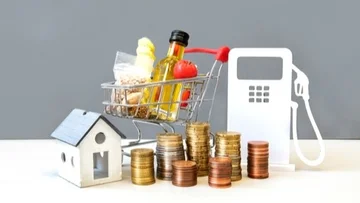
If you've been following recent headlines, consumers appear more financially strained than they have in years, with some working two and three jobs just to pay bills. Yet, the cost of dining out continues to climb.
According to the U.S. Bureau of Labor Statistics' Consumer Price Index (CPI) for Food Away From Home (restaurants and other foodservice), the cost of dining out has increased by an estimated 30% over the past five years. That reality presents both a challenge and an opportunity for pizza operators looking to reinforce the category's longstanding reputation for value.
"The best example that I see in the industry (of a brand) 'getting it right' is Domino's," said Chris Bajda, an e-commerce entrepreneur and managing partner of Groomsday, who tracks trends and sales within the space. "While competitors focused on cutting prices to attract customers, Domino's focused its attention on making their ordering experience frictionless. The easy and reliable ordering process is what impressed people so that they were willing to pay a higher price because of the convenience it provided."
Domino's accomplished this with success as they experienced a 6.2% increase in revenue in Q3 2025.
"The lesson is the same for independent operators. If a customer can't understand your bundle pricing from your website within 10 seconds, you already lost them," he said. "Customers are not confused if eating a pizza today is worth it, the real question is, if they buy from you, will it be worth it? Operators that provide an answer quickly and clearly will be the ones who get traffic back."
That means clearly communicating to consumers the value of ordering a pizza through your website, an app or by walking into your location. Even if that means a bundled menu option that pairs pizza with a salad, chicken wings, drinks or any additional side item that can feed either an individual, a family or a large group.
"For large group celebrations, pizza continues to be a top food choice for many people sharing their meals together," Bajda said. "Businesses that are focused on serving these large groups of customers will bounce back faster than those businesses that are still trying to compete for the same customer base with single deliveries that they have already lost."
Headwinds and hope
We are now in what economists call a K-shaped economy, one that sees higher-income households experiencing faster growth in spending than lower-income households. This has created segmentation among consumers and poses as both a challenge and opportunity for pizzerias, specifically, to meet consumers where they are. According to the National Restaurant Association's 2026 State of the Industry Report, lingering inflation and a softening labor market are tightening household budgets even more, particularly among low- and middle-income consumers. And this is where value propositions, enhanced delivery and bundled meals come into greater power for pizzerias.
"Value is likely the word of the year when it comes to the foodservice space," said Huy Do, a research and insights Manager with Datassential.
And value is no longer defined as what's cheapest, he said, as consumers today want a great value, "but not necessarily the cheapest thing."
"Value today is more than just the lowest price of an item," Do added. "Consumers want the best value, but not the cheapest thing. 2026 is all about bundles as consumers are asking: How many different items can I get for this set price. This means consumers are choosing menu bundles that provide more items, whether more food or better food, and are willing to pay the price even if they have to pay a little bit more."
While competition does still exist within the space — as sales in the retail frozen pizza category have grown roughly 25% over the past five years — pizzerias have one thing the frozen pizza retail sector does not: the ability to bundle and manage pricing expectations in regard to what customers receive, how easily they can get it and at a price they're willing for pay.
"If a pizza shop wants to attract these customers back, ... just telling the customer 'I sell pizza' is no longer sufficient," Badja said.
Datassentials' Do seems to be on the same page and sees opportunities where others might find fault or failure. "I wouldn't say pizza is losing the value war or losing its status," he said. "Pizzerias already have the ability to do some interesting bundles … and some pricing related promotions."
According to Do, success will depend on marketing more intentionally. As consumer expectations shift, pizzerias must evolve the way they connect with customers and demonstrate the value they offer.
"You have to stay relevant and you have to stay aware when you're market has changed," said Mark Zabrowski, who owns Pleasanton, California-based Much Ado About Pizza with his wife, Kira. "Whether higher end or lower end, at the end of the day, everyone wants pizza."
Related Media
Subscribe
Get the latest news and resources from Pizza Marketplace.
Recent Posts


Recent Podcasts