Food & Beverage
For pizzeria operators, menu innovation is more than what’s new

October 26, 2026 | Carl Bachmann, CEO, Riko's Pizza
 ChatGPT
 Grok
 Perplexity
 Claude
In the restaurant business, everybody wants to talk about what's new: the latest flavor, trend, or limited-time offer. But after more than three decades in this industry, I've learned that menu innovation isn't about adding something simply for the sake of change. It has to serve a purpose.
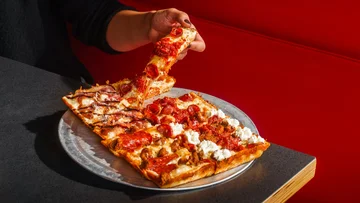
 For any restaurant brand, that starts with understanding why guests come to you in the first place. At Riko's Pizza, our thin-crust bar pie is the draw. It brings people through the door and introduces them to the brand. So, when we think about innovation, we ask a simple question: How do we give the guest who already loves us another reason to put Riko's into their rotation even one more time each month?
That question has shaped how we approach menu engineering. A strong menu needs enough breadth to create different dining occasions, without losing sight of the product that built the brand. We serve families, and while the kids may want pizza every time, mom and dad might want something different. Options like sliders, wings, salads and wraps appeal to different tastes and give families another reason to return.
But simply adding more items isn't innovation. The real challenge is creating variety without losing your specialty, and without making the restaurant more difficult to operate, especially as a brand grows.
Simplicity creates consistency
I'm a big believer in a limited kitchen platform, because simplicity creates consistency. At Riko's, we don't have deep fryers. Our primary equipment is our pizza oven and TurboChef. Some might see that as a limitation, but I see it as a discipline. Every new item has to fit the operation we've built. If we can create something guests are excited about without adding equipment, complicated processes, or a long list of new SKUs, we have a much better chance of executing it consistently across every restaurant.
That same discipline applies to trends, especially when restaurant operators have access to more information than ever – from industry research and trade publications to marketing and culinary teams. Data can tell you what consumers are interested in, but that doesn't mean every trend belongs on your menu. You still have to determine whether it fits your brand, and whether you can execute it well.
Our recent Pollo di Buon Gusto LTO is a great example. With protein becoming a major consumer focus, we looked at what we already had, rather than bringing a completely new product into our kitchens. Chicken was already part of our platform, our wings aren't fried, and the ingredient gave us room to create. We developed new pizzas, wing flavors, and a slider while introducing very few additional SKUs, allowing us to respond to consumer interest without creating unnecessary complexity behind the line.
Identifying the opportunity, however, is only the beginning. Eventually, you have to get into the kitchen.
I bring the trends and ideas we're seeing to Enzo, our Director of Culinary, and give him room to create. Then we taste, adjust, and taste again. It's not unusual to go through four or five rounds before we're comfortable moving forward (even if we're a little full!). We also tested our recent LTO pizzas in one restaurant for about 30 days, a process that helps determine whether an item meets our standards for flavor and can be executed successfully in the restaurant.
It's also why I don't believe in forcing an LTO every quarter simply because the calendar says you need one. We may do two or three meaningful LTOs a year. I'd rather do fewer, run them longer, and get them right. I tell our team they can bring me 100 ideas, and I may say no to 99, but if we walk away with one product everybody believes in, that's a successful process.
Being selective matters because every item on the menu says something about your brand. One of the biggest mistakes restaurant companies can make is confusing variety with identity. The better approach is understanding the lane your brand owns and finding room to innovate within it.
Technology will continue to change that process, and I think AI can make us more efficient. It can identify trends, aggregate information, and help teams evaluate more possibilities before stepping into the kitchen. But there is an important distinction between identifying an opportunity and creating a great menu item.
AI can't cook or taste the pizza
It can tell you a combination of ingredients sounds great, but it can't tell you what happens when those ingredients hit our thin dough in our ovens. Somebody still has to make it, taste it, and determine whether it works operationally and whether it tastes like Riko's.
Menu innovation comes down to that balance between looking forward and protecting what already works. Consumer preferences and trends will continue to change, and restaurants have to evolve with them. But innovation doesn't mean chasing every trend. It means understanding what's happening around you, knowing what fits your brand, and having the discipline to execute it well.
At Riko's, we're always going to protect the thin-crust bar pie that brought people to us in the first place. Everything we build around it should give guests more choices and more reasons to come back, without losing sight of what made them choose us to begin with. Ultimately, the best menu innovation isn't simply what's new. It's what works.
Related Media
Subscribe
Get the latest news and resources from Pizza Marketplace.
Recent Posts

Recent Podcasts